Creator Economy Statistics 2026: The Real Numbers
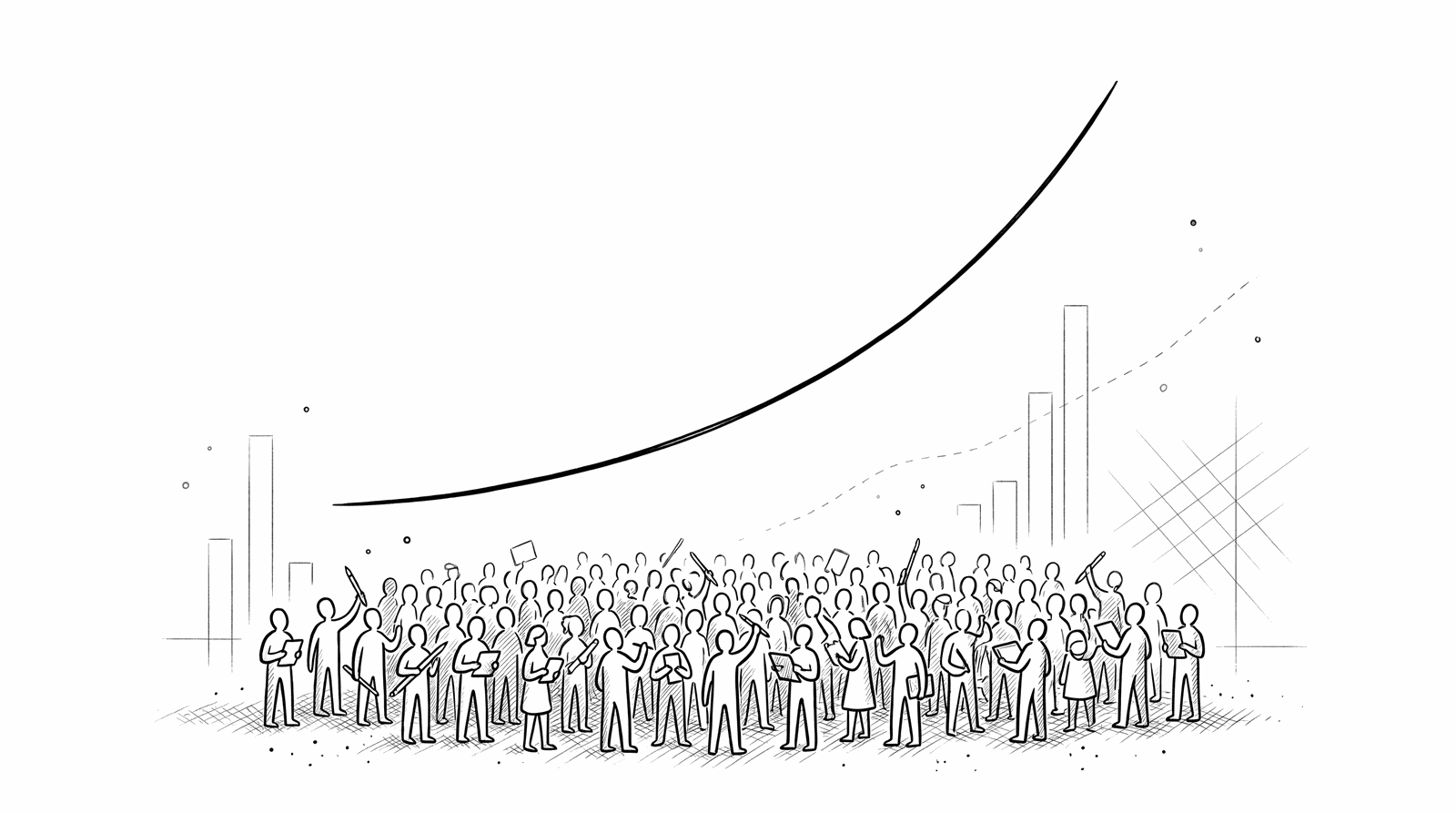
The creator economy is a roughly $250 billion market in 2026, and almost none of that money reaches the people the headlines are about. Goldman Sachs Research thinks the market could approach $480 billion by 2027, nearly doubling in five years. That is the number every deck leads with. The number nobody puts on the slide is the one from Linktree’s own creator survey: 46 percent of full-time creators earn less than $1,000 a year. Both are true at the same time. A huge, fast-growing market sitting on top of an income distribution so lopsided that “creator” and “creator who earns a living” are almost different jobs.
I run a social media publishing tool, so I read these reports for a living and I talk to the people in the long tail. Below are the creator economy statistics I think are worth knowing in 2026, each one attributed to a named source, and the founder’s read on what they mean for the tools a creator actually needs. Where I could not verify a figure, I said so instead of inventing it.
The market is huge and growing fast, and the forecasts disagree by hundreds of billions
The creator economy is worth somewhere between $234 billion and $250 billion in 2026, and the range itself is the honest answer.
The most cited anchor is Goldman Sachs Research, which put the total addressable market at about $250 billion and projected it could roughly double to $480 billion by 2027. Their growth engine is specific: spending on influencer marketing and platform payouts, fueled by short-form video going mainstream. Coherent Market Insights tracks a year-by-year series that lands near $249 billion for 2026, growing at about a 22.5 percent compound annual rate toward $528 billion by 2030. Different firms use different definitions of what counts, which is why you will see 2026 quoted anywhere from $234 billion to $250 billion, and 2030 projections that swing from half a trillion to over a trillion depending on whether the analyst folds in commerce and platform revenue.
Here is the market-size trajectory using one consistent source, so the shape is not distorted by mixing methodologies.
The direction is not in dispute. The market is big and compounding at north of 20 percent a year. What that top-line number hides, and what the rest of this piece is about, is who inside that market actually gets paid.
There are 50 million creators, or 200 million, and the difference is the whole point
Depending on who is counting, there are 50 million creators or over 200 million. That is not sloppy data. It is two different definitions, and the gap between them is where the real story lives.
Goldman Sachs uses the narrower lens: about 50 million people it considers creators, growing at a 10 to 20 percent annual rate. Linktree’s Creator Report used a wider one and estimated over 200 million people could be classified as creators, and later 2026 roundups push that past 207 million once you count everyone who posts content with any intent to build an audience. Neither is wrong. Goldman is roughly counting people who treat it like a job. The 200 million number counts the person with 400 followers and a ring light too.
That distinction matters because almost every optimistic creator-economy headline quietly borrows the big population number and pairs it with the small group’s earnings. The framing implies 200 million people are building businesses. The data says a rounding error of them are. Hold on to both numbers. One is the size of the crowd. The other is the size of the stage.
Almost nobody earns a living, and the distribution is worse than most people guess
The uncomfortable core statistic of the creator economy is this: of creators who do it full-time, only 12 percent earn more than $50,000 a year.
That figure is from Linktree’s Creator Report, and the rest of its breakdown is bleaker than the headline. Among full-time creators, 46 percent earn less than $1,000 a year. Only 12 percent clear $50,000. Goldman Sachs framed the top tier a different way and reached a similar place: roughly 4 percent of all creators are professionals who pull in more than $100,000 annually. Whichever cut you use, the shape is the same. A tiny head, an enormous tail, and very little in between.
| Creator income (full-time) | Share | Source |
|---|---|---|
| Under $1,000 / year | 46% | Linktree |
| Over $50,000 / year | 12% | Linktree |
| Over $100,000 / year (professionals) | ~4% | Goldman Sachs |
This is a power law, not a bell curve. In a bell curve, most people cluster near the average and a bigger market lifts everyone. In a power law, the top sliver captures most of the value and the median stays flat no matter how large the market gets. The creator economy doubling to $480 billion does not mean the median creator’s income doubles. It mostly means the already-large accounts and the brands routing spend through them get larger. If you are planning a creator path around the market-size chart, you are reading the wrong statistic. The one that predicts your outcome is the distribution, and the distribution is brutal.
One honest caveat on the Linktree numbers. The headline survey figures trace to Linktree’s Creator Report, which is a couple of years old now, and a fresher cut would strengthen the point. I trust the direction far more than any single decimal. Every independent source I found agrees the median creator earns very little and the top few percent capture almost everything.
Where the money actually comes from: not one stream, and not brand deals
Creator income is a portfolio, not a paycheck, and the creators who earn assume that from the start.
The tell is in the brand-deal data. Linktree found that 70 percent of creators earn less than 10 percent of their total income from brand partnerships. The influencer-marketing sponsorship most people picture as “how creators get paid” is a minor line item for the overwhelming majority. The earners stack revenue: platform ad payouts, sponsorships, subscriptions and memberships, affiliate links, and their own digital products. The direction, again, is consistent across everything I read. Single-stream creators underperform, and diversified ones out-earn them by a wide margin.
Set that beside how brands are spending, and the two halves of the market come into focus.
Brand spend on creators is climbing fast, and the money concentrates upward
Brands will spend somewhere around $27 to $34 billion on influencer marketing in 2026, and nearly nine in ten marketers plan to spend more.
The exact market-size figure depends on the analyst. Multiple 2026 roundups put global influencer marketing between roughly $27.5 billion and $34 billion, with more bullish forecasts reaching toward $40 billion, and the spread again reflects what each firm folds into “influencer marketing.” The clearer signal is intent. Influencer Marketing Hub’s 2026 Benchmark Report, built on 600-plus marketers, found 87.49 percent expect their influencer budget to increase this year, and 72.22 percent expect it to rise by 50 percent or more. Their reported top constraint is telling: rising creator costs, cited by 35.4 percent of respondents. Demand for the top creators is outrunning supply, which is exactly what pushes their rates, and the concentration, higher.
So follow the flow. Brand budgets are expanding aggressively, but that money chases the creators who already have proven reach. It does not trickle evenly down the tail. A rising influencer-marketing tide lifts the yachts. The rowboats are competing for whatever attention they can earn organically, which brings us to the part of this that a founder actually has an opinion about.
The founder’s read: the long tail does not need more apps, it needs consistency and distribution
Here is what all of this adds up to for the 190-plus million creators who are not in the top few percent. The bottleneck is not tooling. It is showing up.
The market is enormous, the money is real, and it is concentrated at the top by a power law that a bigger market does not fix. If you are in the long tail, the goal is not to out-spend or out-tool the earners. It is to climb out of the tail, and the only reliable ladder is publishing consistently on the one or two platforms where your format actually fits, long enough for compounding to work. That sounds obvious. It is also the exact thing almost nobody sustains, because posting to three platforms by hand, every week, for a year, is a grind that quietly kills more creator attempts than bad content does.
The creator-tool market has responded to this by selling more apps. Analytics apps, hook-writer apps, repurposing apps, an app for each platform. I think most of that is noise for someone in the long tail. You do not have a shortage of features. You have a shortage of consistency and distribution: the same good post reliably reaching more of the right people, week after week, without you burning out on the mechanics. That is a much smaller problem than the app store implies, and it is the one worth solving first.
This is where I will admit my bias, because it is the reason I built the thing I built. Keeping a queue full across a few platforms, on a schedule you can actually defend for a year, is the specific grind PostSider exists to remove, whether a person or an AI agent is filling the calendar. It does not make you a better creator. It removes the reason most people in the long tail stop before they ever find out. If you want to sanity-check your own footing first, the free best time to post tool and the engagement rate calculator run in the browser with no signup.
For the platform-by-platform side of where that reach is actually growing, the sibling piece on social platform growth in 2026 goes deeper than I can here. And if you are a small business rather than a solo creator, the economics tilt differently, which I broke out in small business social media in 2026.
The statistics that predict your outcome versus the ones that just sound big
Not every number in a creator-economy report is worth carrying around. Here is the filter I use.
Carry these. The income distribution (12 percent over $50k, 46 percent under $1k), because it, not the market size, predicts what you will actually earn. The brand-deal share (70 percent earn under 10 percent of income from sponsorships), because it kills the fantasy that one big deal is the plan. The diversification gap, because multi-stream creators consistently out-earn single-stream ones. Budget-increase intent (87 percent of marketers spending more), because it tells you the demand is real even if it concentrates upward.
Treat these as noise. The half-trillion market-size forecast, on its own, because a bigger pie you have no slice of changes nothing for you. The 200 million creators headline, because it inflates the crowd without telling you where the stage is. Any single-decimal earnings figure quoted without a named source and a date, because the good numbers here come from Goldman Sachs, Linktree, and Influencer Marketing Hub, and the rest is often one blog citing another.
So the honest one-line summary of the creator economy in 2026 is this. It is a $250 billion market where a rounding error of the participants captures almost all the money, and the single best thing anyone in the long tail can do about that is pick their platforms, keep a cadence they can hold for a year, and stop shopping for tools that promise a shortcut past the part that was never optional. Which statistic are you actually building your next year around?
Frequently asked questions
How big is the creator economy in 2026?
Goldman Sachs Research estimates the creator economy at roughly $250 billion and projects it could approach $480 billion by 2027, nearly doubling in five years. Coherent Market Insights puts the 2026 figure near $249 billion, growing at about 22.5 percent a year.
How many creators are there in the world in 2026?
Goldman Sachs counts about 50 million people as creators, while Linktree's report and later roundups classify over 200 million people as content creators. The gap is one of definition: professional creators versus anyone who posts.
How many creators actually earn a full-time living?
Very few. Linktree's Creator Report found only 12 percent of full-time creators earn more than $50,000 a year, and 46 percent make under $1,000. Goldman Sachs pegs the professional tier that clears $100,000 at roughly 4 percent of all creators.
Where does creator income actually come from in 2026?
Mostly brand deals and platform ad payouts, not a single stream. Linktree found 70 percent of creators earn less than 10 percent of their income from brand partnerships, so the reliable earners diversify across ads, sponsorships, subscriptions, and their own products.
How much do brands spend on creators in 2026?
Influencer marketing spend sits around $27 to $34 billion in 2026 depending on the source, and Influencer Marketing Hub's 2026 benchmark found 87.49 percent of marketers expect to increase their creator budgets this year.
Is it too late to become a creator in 2026?
No, but the odds of it replacing a salary are low. The realistic path treats it as a side income first, focuses on one or two platforms, and competes on consistency rather than volume, because that is what separates the long tail from the earners.